
Building Ultra Resilience: Inside Poppy’s Road to Second Place at Julian Alps by UTMB
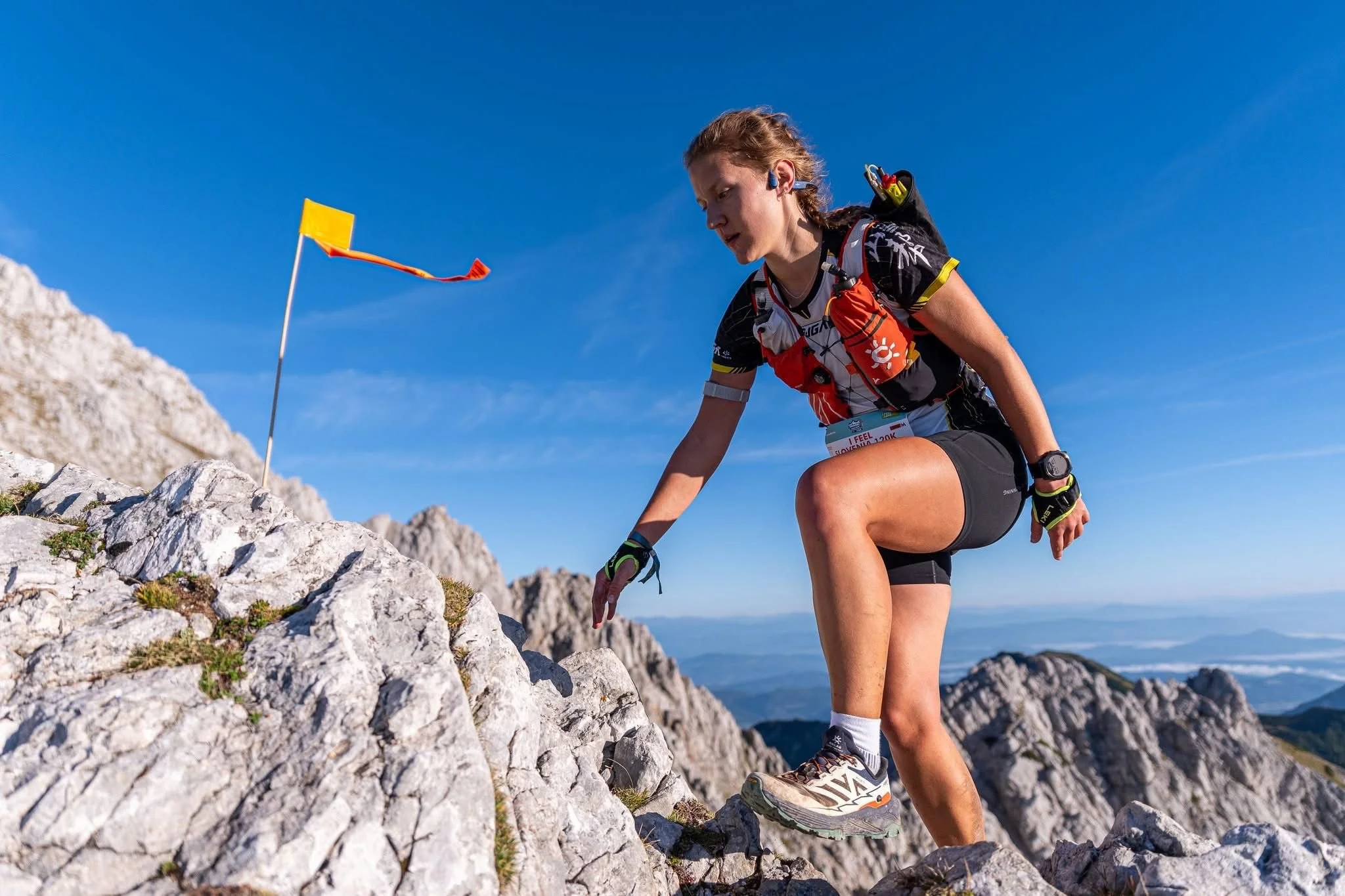
In September 2025, Poppy participated in her longest race to date, the 124km Julian Alps by UTMB. This race featured around 6,000m of ascent, and took Poppy 17:37:14 - finishing in a superb second place. Prior to this, her longest race distance had been 100 km, the most ascent in a single race was 3,900m, and her longest race time had been just over 12 hours. So, how did she build up the endurance and strength to tackle her longest distance and race time yet? Here’s an overview from the coach and athlete’s perspective.
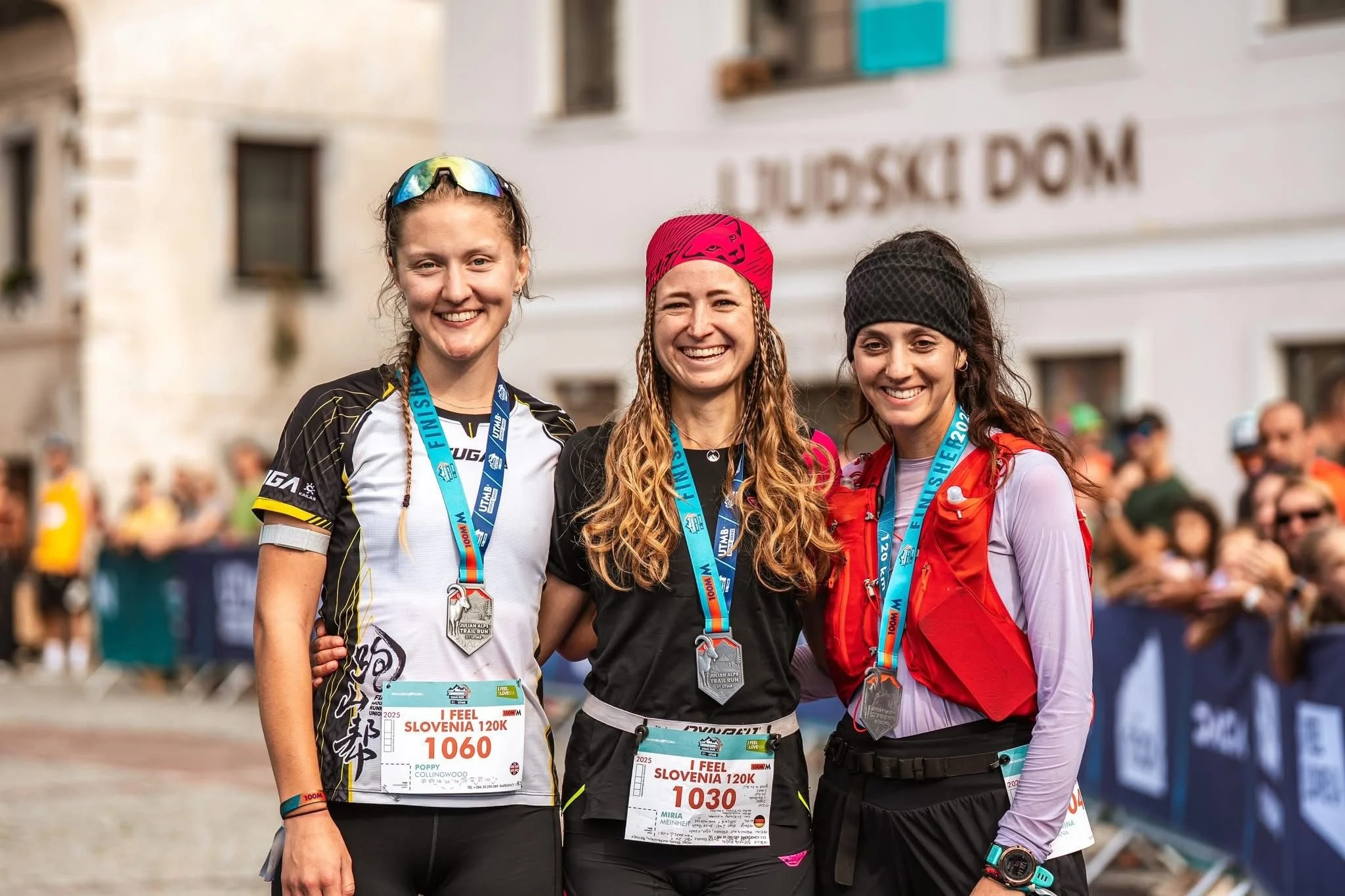
Progressive training load, greater attention to details as race duration increased (and more things can go wrong), and a team approach defined Poppy’s 2025 running season as she targeted her longest trail race yet.
Increasing Running Volume
Reviewing Poppy’s training over the past 3 years, you can see how things have changed as she has built up to longer race distances year on year.
Three Years of Weekly Volume
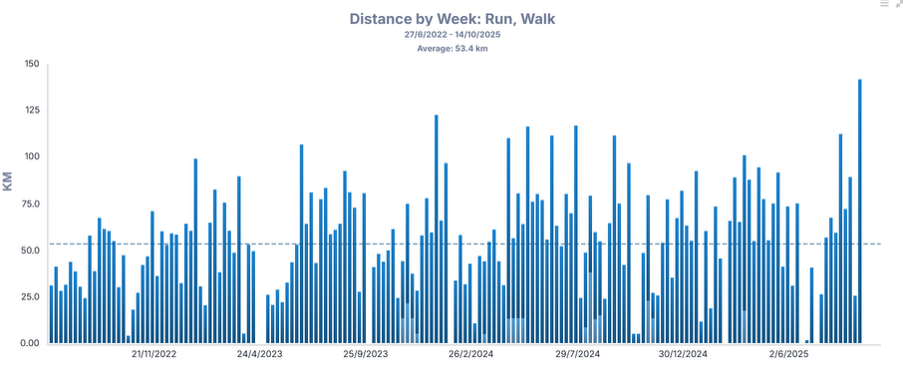
*The horizontal dashed line is the 3-year weekly average.
Weekly distance only reveals part of her training volume (ascent, terrain, cross training and other elements all influence training load), but it does show that over time, there has been an upward trend. Often, the weeks with no running, or with very limited running, took place after a race, in order to allow time for the body to recover.
Weekly Longest Run
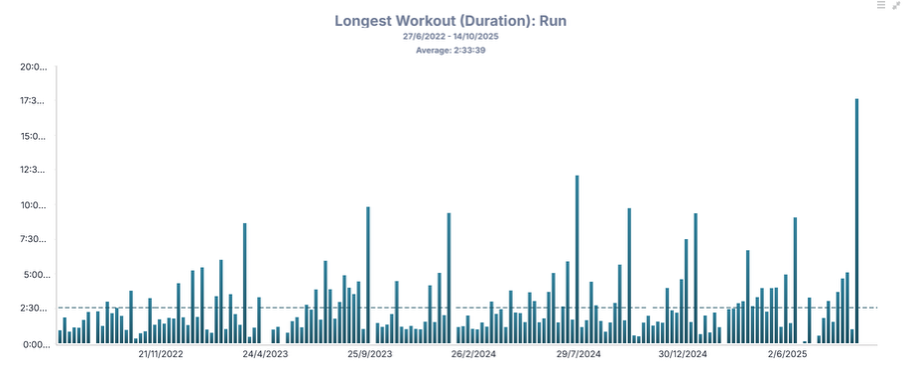
Part of the volume increase for Poppy was due to an overall increase in the duration of her longest weekly runs. The weekend long run is a staple of many distance runners’ training routine, and Poppy’s training follows a similar pattern. Since she works full time, her long runs are typically set for the weekend, with her weekday runs being shorter. The large spikes are nearly always her previous races.
Elevation Gain per Week

Whilst Poppy lives in an area with undulating roads and trails, it was always clear that we would need to be creative to simulate mountain running. It is not easy for her to get access to mountains (even with placing her long runs on the weekend!).
On the ETT RunClub, we had a live Q&A discussing Poppy’s training and she shared her strategy to do “lots of trips to Cheddar Gorge” to get elevation and technical terrain training. Otherwise, a lot of the uphill training was done indoors on a stairmaster / stepper or a treadmill set to an incline. These sessions aren’t captured in the TrainingPeaks graphs. However, you can see how, from Spring 2025, Poppy had multiple weeks with significant elevation gain above her rolling three-year average.
“I’ve got Cheddar Gorge nearby, but that’s only like three, four kilometres and that’s it. Or Pen y Fan and the Brecon Beacons, but that’s a bit of a longer drive.”
Beyond the Running
In addition to her run training, Poppy does strength and conditioning and cross-training on the bike. Both of these have also increased gradually over the past 3 years to help adapt her body to the increasing demands of added volume and elevation and to steer clear of any potential injuries.
ETT Performance Director Doug also notes: “It is important to balance Poppy’s training with her professional and personal life, so changes to training have been gradual and adjusted based on what she has happening in all these areas.” Indeed, for someone working full-time, it’s always been crucial to adapt training load to the stress produced in areas other than running.
Adapting for Ultras: Mindset, Gut Training, Crewing, and Visualisation
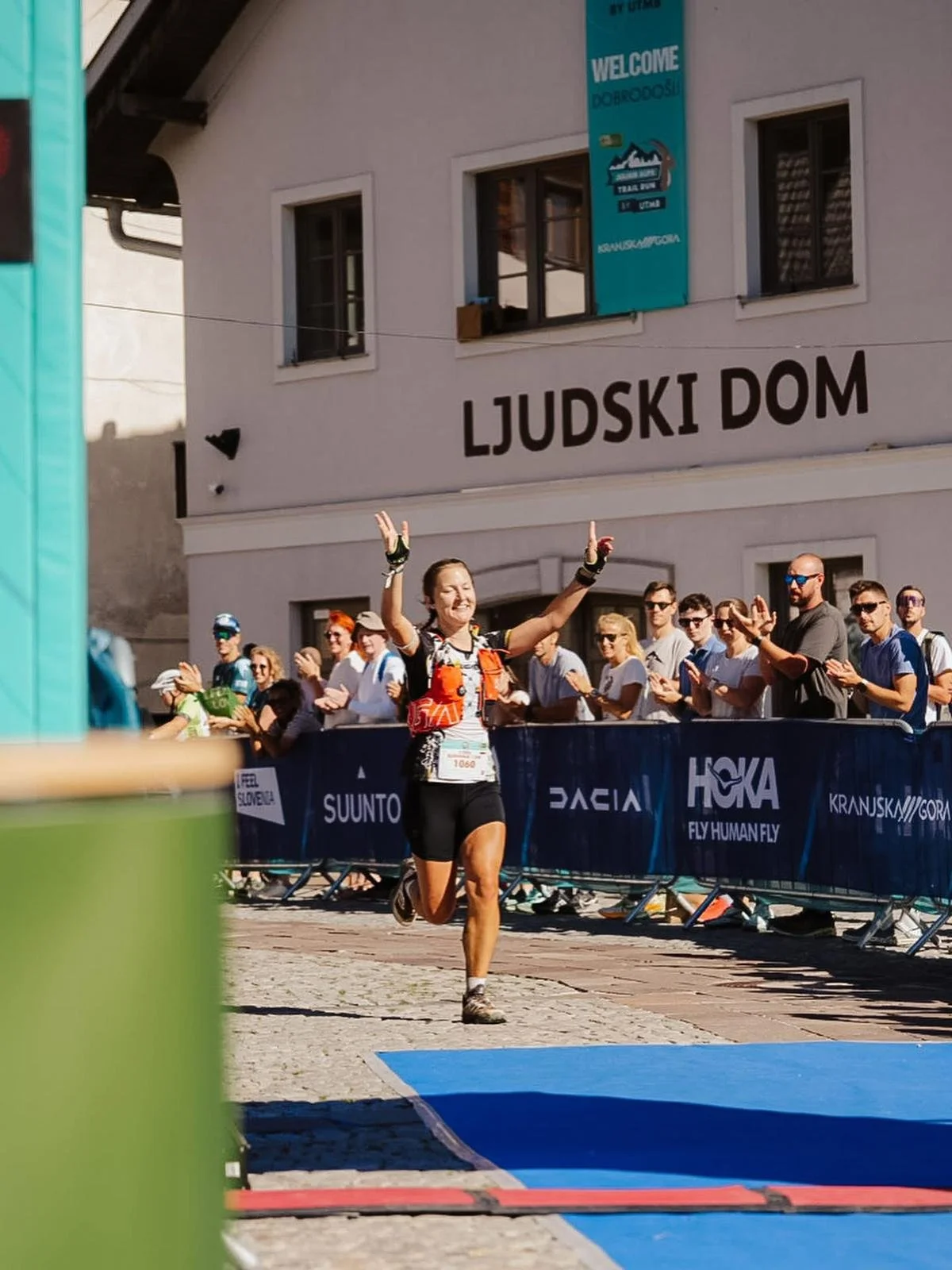
One important determinant of success for Poppy in longer races has been working with team sport psychologist Dr Josephine Perry to set controllable goals for the event. While she always hoped she would finish in the top 3 women, Poppy knew that this was outside of her control, so she focused instead on creating some objectives that would focus the mind and give her a sense of achievement, no matter what the race result was. Firstly, she focused on running her own race and maintaining a positive attitude, particularly in tricky sections towards the end, where – after a long descent – she had to face a long stretch of bike path in the heat.
Smiling is known to reduce perception of effort and Poppy made it a goal to always smile at and thank the race marshals and volunteers. This helped her keep morale high and manage the mental and physical challenges she was going through.
--
An essential element of preparing for longer ultras was gut training. Poppy worked closely with High Performance Dietitian Rebecca Dent to develop a detailed race fuelling plan including Nduranz gels and carbohydrate drink. But, even before the race itself, it was critical to fuel training appropriately and to ensure that she recovered well after every session. Moreover, looking after gut health more broadly ensured that Poppy didn’t have any GI issues at Julian Alps: "I made sure to have quite a lot of kefir and gut healthy drinks and food prior, just to try and make it just as happy as I possibly can.”
Poppy shared, "I think training the gut is really important. I had a really happy gut throughout that race, and I think that was what kind of made my race to a certain extent."
--
We have also spoken before about the benefit of visualisation for preparing a race. Focusing not just on downhills, Dr Josie Perry also advises the ETT athletes on how to split up the race and prepare mentally for the challenge ahead. Of course, the longer the event, the harder it is to take it all in and this can seem daunting to many people starting an ultra. But Poppy thought about how she would split up her experience: hills, downhills, flat sections. She also visualised herself on the course, imagining the feelings and scenarios she might encounter, which helped her feel more prepared and confident on race day.
This was particularly helpful in relation to preparing her crew – one final element that contributed to her success. The Julian Alps course is well suited to crewing, since runners keep returning to the same valley, which allows crews to support runners without too much stress linked to transport. Poppy thought through how each part of the race would unfold and what she would need in terms of refuelling, kit changes, and general encouragement from her team. They then met her at the designated aid stations and took some of the burden of logistics away from her, such as swapping head torch batteries, letting her focus on the race itself.
Key Takeaways for Your Own Ultra Goals
Poppy's journey to conquering the Julian Alps by UTMB is a testament to the power of strategic planning, mental resilience, and a supportive team. By focusing on incremental progress, maintaining a positive mindset, and preparing thoroughly, Poppy was able to achieve remarkable success. As she’s now planning to tackle even longer challenges in 2026, there is opportunity to continue to increase her running volume, balancing it with a multidisciplinary team approach that looks at mental, nutrition, recovery, and other aspects as they arise.
If you’re preparing an ultra running race in 2026, here are some key tips from Poppy’s experience:
Incremental Progress
Gradually increase your running volume and race distances to allow your body and mind to adapt without overwhelming stress.
Gut Training
Prioritise developing a fuelling strategy that works for you to avoid gastrointestinal issues during races.
Mental Preparation
Use visualisation techniques to mentally prepare for the race, breaking it down into manageable sections to stay focused and confident.
Positive Mindset
Maintain a positive attitude, smile, and thank race volunteers to boost morale and reduce the perception of effort. Practice this in training and through visualisation ahead of the event.
Supportive Crew
Plan your race logistics with your crew to ensure seamless support, allowing you to focus on your performance.